
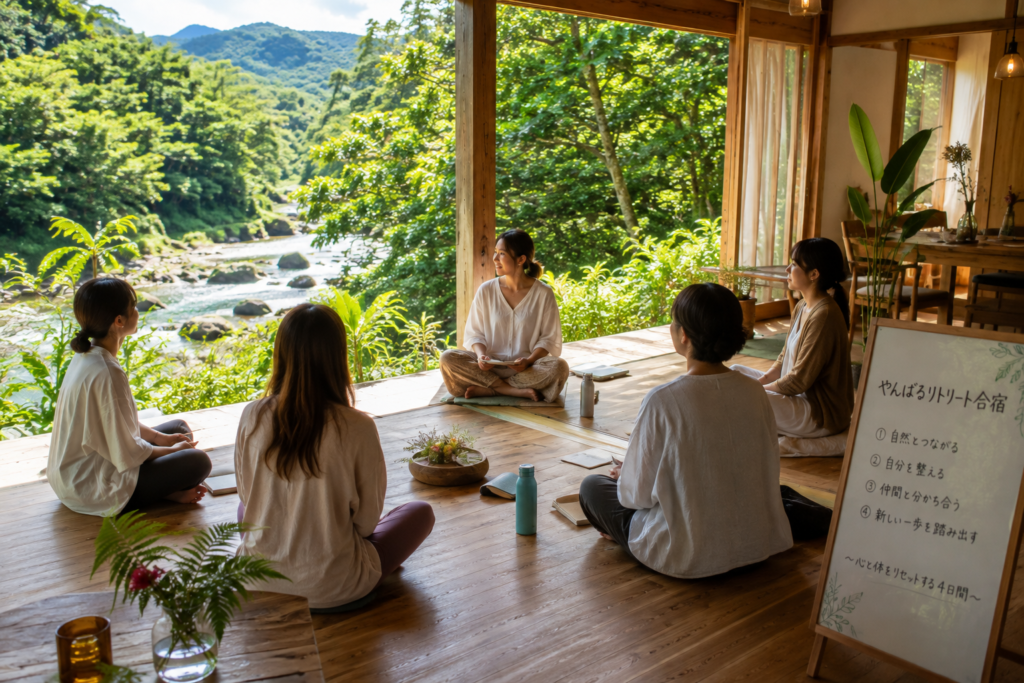
チームの結束力を高めたい、新しい発想を生み出したい——そうした企業の合宿ニーズに応えるのが、沖縄・名護市にあるリトリート合宿施設MANANI(マナニ)です。やんばるの豊かな自然に囲まれた環境は、通常のオフィスや会議室では得られない体験を提供します。
企業合宿の目的を再確認する
企業合宿を実施する目的は、単なる情報共有ではありません。チーム間の相互理解を深めること、中長期的な方針を議論すること、そしてメンバー一人ひとりが自社やチームとの関わりを見つめ直すこと。こうした目的を達成するためには、日常業務から物理的にも心理的にも距離を置ける環境が欠かせません。
なぜ「非日常の環境」が必要なのか
慣れ親しんだオフィスでは、どうしても普段の役割や関係性がそのまま持ち込まれてしまいます。環境を変えることで、参加者は無意識のうちに「いつもと違うモード」に切り替わり、率直な意見や新しい視点が生まれやすくなります。
やんばるという環境が持つ効果
やんばるは、2021年に世界自然遺産に登録された豊かな自然が広がるエリアです。深い森の緑や潮の香りに触れることで、参加者の緊張が自然とほぐれていきます。自然環境の中で行う対話は、会議室で交わされる議論とは質そのものが異なるといわれています。
名護市までのアクセスと移動のしやすさ
名護市は那覇空港から車でアクセスしやすく、全国各地から参加者が集まる合宿にも適した立地です。空港からの移動時間を活用して、道中でチームの雰囲気を温めることもできます。
MANANIが企業合宿に選ばれる理由
一棟貸しのMANANIは、周囲を気にせず利用できるプライベートな空間です。広々としたリビングをミーティングスペースとして使い、ウッドデッキを休憩や懇親の場として活用するなど、目的に応じた柔軟な使い方が可能です。
チームビルディングに効果的なプログラム例
朝のウォーキングやヨガで身体をほぐしてから議論に入る、自然の中でペアワークを行う、夜は食事を共にしながら本音で語り合うなど、環境を活かしたプログラムを組むことで、チームの一体感は大きく高まります。
オフサイトミーティングとしての活用
経営層や部門リーダーが集まる戦略会議、プロジェクトのキックオフミーティングなど、集中して議論したい場面にもMANANIは適しています。日常業務の中断が入らない環境は、深い議論を可能にします。
ワーケーションとの組み合わせ
合宿の前後に個人のワーケーション期間を設けることで、参加者は沖縄の自然や暮らしをより深く体験することができます。仕事と休息を組み合わせた新しい働き方の実践の場としても、やんばるは注目されています。
合宿を成功させるためのポイント
詰め込みすぎないスケジュール設計、参加者が自由に過ごせる余白の時間、そして議論の成果を持ち帰るための振り返りの時間。この三つを意識することで、合宿の効果は大きく変わります。
参加者の満足度を高める工夫
沖縄ならではの食材を使った食事や、地域の自然を体験するアクティビティを取り入れることで、参加者にとって記憶に残る合宿になります。「また参加したい」と思える体験が、次回以降の合宿の質も高めていきます。
よくあるご質問
「プロジェクターやホワイトボードは使えますか」「食事の手配は可能ですか」「何名まで対応できますか」といったご質問については、合宿の目的や人数に応じて個別にご相談いただけます。
チームビルディングとは何か
チームビルディングとは、単に親睦を深めることではありません。メンバーがお互いの強みや考え方を理解し、目的に向かって協働できる状態をつくることを指します。表面的な仲の良さではなく、意見の相違を安心して口に出せる関係性こそが、成果を生むチームの土台となります。
そのためには、業務の枠を離れて人としての側面を知る時間が必要です。合宿という形式は、まさにそうした時間をまとめて確保できる手段として、多くの企業に選ばれています。
心理的安全性を育てる場づくり
近年、チームの生産性を高める要素として「心理的安全性」が注目されています。失敗や反対意見を口にしても否定されないという安心感があるチームは、課題の発見も改善も早いといわれています。
心理的安全性は、日常の業務の中だけで育てるのが難しいものです。自然に囲まれた場所で肩の力を抜いて過ごす時間は、こうした関係性の土台をつくるうえで大きな助けとなります。
リモートワーク時代における対面の価値
オンラインでのやり取りが当たり前になった今、対面で顔を合わせる時間の価値はむしろ高まっています。画面越しでは伝わりにくい表情や間、雑談の中から生まれるアイデアは、同じ場所で過ごすことでこそ生まれます。
年に一度でも、チーム全員が同じ場所に集まる機会を設けることで、その後のオンラインでのやり取りの質も変わってきます。合宿は、そうした関係性への投資といえるでしょう。
新入社員研修としての活用
新しく加わったメンバーが組織に馴染むうえでも、合宿という形式は効果的です。会議室での座学だけでは伝わりにくい組織の価値観や空気感を、共に過ごす時間の中で自然に感じ取ってもらうことができます。
やんばるの自然の中での体験は、記憶に残りやすいという利点もあります。「入社して最初に行った合宿」という共通の思い出が、その後の関係づくりを後押ししてくれるでしょう。
経営合宿・戦略立案の場として
経営層が集まって中長期の方針を議論する場としても、日常から離れた環境は有効です。オフィスにいると、どうしても目の前の業務や割り込みに意識が引っ張られてしまいます。
やんばるのような静かな環境では、腰を据えて長期的な視点で議論することができます。数時間単位でじっくり向き合う時間が確保できることが、合宿形式の最大の利点です。
部門横断プロジェクトのキックオフに
複数の部門からメンバーが集まるプロジェクトでは、最初の関係づくりが成否を左右します。互いの背景や役割を理解しないまま進めると、後になって認識のずれが表面化してしまうことがあります。
キックオフの段階で合宿を行い、じっくりと対話の時間を取ることで、その後の進行が格段にスムーズになります。同じ食卓を囲んだ経験は、部門の壁を越える助けになります。
自然の中での対話がもたらす変化
会議室で向かい合って座る対話と、森の道を並んで歩きながらの対話は、質がまったく異なります。並んで歩くとき、人は相手の顔色をうかがう必要がなく、自分の思考に集中しやすくなるといわれています。
やんばるの遊歩道や海辺は、そうした「歩きながらの対話」に適した環境です。合宿のプログラムに歩く時間を組み込むだけでも、出てくる言葉が変わってくることに驚かれるかもしれません。
役職を超えたフラットな関係づくり
合宿では、食事の準備や片付けなどを参加者全員で分担することもあります。こうした場面では役職が意味を持たなくなり、普段とは違う一面が見えてきます。
一棟貸しのMANANIでは、キッチンを使って共に食事をつくることも可能です。同じ作業を分担するという経験が、肩書きを超えた関係づくりを自然に促してくれます。
合宿の成果を日常業務につなげる
合宿で盛り上がった議論が、日常に戻ると忘れられてしまうことは珍しくありません。それを避けるためには、合宿の最後に具体的な行動と担当者、期限を明確にしておくことが重要です。
さらに、一か月後や三か月後に振り返りの機会を設けることで、合宿の成果は着実に定着していきます。合宿は終着点ではなく、変化の出発点として位置づけることが大切です。
参加者の心身の健康への配慮
合宿は、参加者にとって心身の負担にもなり得ます。長時間の移動や慣れない環境での宿泊に加えて、議論が続けば疲労も蓄積します。休憩時間や睡眠時間を十分に確保する配慮が欠かせません。
やんばるの環境は、休息を取るのに適した条件が揃っています。夜が静かで眠りが深くなり、朝の空気が心地よい。こうした環境そのものが、参加者のコンディションを支えてくれます。
社内イベントとして企画する際のポイント
合宿の企画では、参加が義務的な雰囲気にならないよう配慮することも大切です。目的や意義を丁寧に伝え、参加者が前向きに臨める状態をつくることで、当日の空気も変わってきます。
また、業務時間としての扱いや費用負担の範囲についても、事前に明確にしておくと安心です。参加者が余計な不安を抱えずに臨めることが、合宿の成果にも直結します。
沖縄で開催することの付加価値
沖縄という土地には、独自の文化と穏やかな空気があります。合宿の合間に地域の食文化にふれたり、海辺を歩いたりすることは、参加者にとって忘れられない体験になります。
「沖縄で合宿をした」という記憶は、それ自体がチームの共通言語になります。数年後に振り返っても話題になるような体験は、組織の結びつきを長く支えてくれるでしょう。
環境への配慮とサステナビリティ
世界自然遺産に登録されたやんばるで合宿を行うにあたっては、環境への配慮も大切な視点です。ゴミの持ち帰りや使い捨て製品の削減など、小さな工夫を積み重ねることが求められます。
こうした姿勢は、企業としての価値観を参加者に示す機会にもなります。自然の中で自然を守ることを考える時間は、組織のサステナビリティへの意識を高めるきっかけにもなるでしょう。
日程と期間の考え方
合宿の期間は、目的によって使い分けることをおすすめします。関係づくりが主目的であれば一泊二日でも十分な効果が得られますが、戦略立案のように結論を出す必要がある場合は、二泊三日程度の余裕があると議論が深まります。
沖縄への移動時間を考えると、初日と最終日は移動が中心になります。実質的な議論の時間を確保するためには、日程に少し余裕を持たせることが重要です。
オンライン参加者との併用
全員が現地に集まれない場合は、一部のメンバーがオンラインで参加する形も可能です。その際は、現地の音声や画面の共有方法を事前に確認し、オンライン参加者が置いていかれない進行を意識することが大切です。
MANANIでは、オンライン会議にも配慮した環境をご用意しています。現地とオンラインを組み合わせたハイブリッド形式の合宿についても、目的に応じてご相談いただけます。
合宿後のフォローアップ
合宿の効果を持続させるには、終了後のフォローアップが欠かせません。決定事項を共有する資料を作成し、参加していないメンバーにも内容を伝えることで、組織全体に成果が波及していきます。
また、参加者からのフィードバックを集めることで、次回の合宿の質を高めることができます。良かった点と改善したい点を率直に共有できる関係性そのものが、合宿の成果の一つといえるでしょう。
外部ファシリテーターの活用
議論の内容が難しい場合や、社内では話しにくいテーマを扱う場合には、外部のファシリテーターに進行を依頼することも有効です。中立的な立場の人がいることで、参加者は役職を意識せずに発言しやすくなります。
主催者自身が進行役を兼ねると、議論に参加しきれないこともあります。目的に応じて役割を分けることで、合宿全体の質を高めることができます。
沖縄の食を通じた交流
合宿の夜、地元の食材を使って全員で食事をつくる時間は、思いがけず深い交流を生みます。役職に関係なく同じ作業を分担し、同じ食卓を囲む経験は、会議では得られない親密さをもたらします。
名護市の市場で食材を選ぶところから始めれば、それ自体がチームでのアクティビティになります。沖縄ならではの食材との出会いも、参加者にとって楽しい時間になるでしょう。
合宿を検討し始めたときの進め方
合宿の実施を検討し始めたら、まずは目的と参加人数、希望する時期をおおまかに整理することをおすすめします。これらが決まっていれば、施設や日程の相談もスムーズに進みます。
MANANIでは、合宿の目的や進行内容に応じたご相談を承っております。初めて社外での合宿を企画される場合でも、お気軽にお問い合わせください。
合宿の記録を残す
合宿での議論や気づきは、写真や議事録として残しておくことをおすすめします。時間が経つと記憶は薄れますが、記録があれば当時の熱量を思い出すことができます。次回の合宿の出発点にもなります。
沖縄・名護市での企業合宿やチームビルディングをご検討の際は、ぜひやんばるのリトリート合宿施設MANANIにお問い合わせください。
English
For companies that want to strengthen team cohesion and generate new ideas, MANANI, a retreat camp facility in Nago City, Okinawa, is designed to meet exactly those needs. Surrounded by the rich nature of Yanbaru, it offers experiences that an ordinary office or meeting room simply cannot.
Revisiting the Purpose of a Corporate Retreat
The purpose of a corporate retreat is more than sharing information. It is about deepening mutual understanding across the team, discussing medium and long-term direction, and giving each member a chance to reconsider their relationship with the company. Achieving this requires an environment that creates both physical and psychological distance from daily work.
Why an “Extraordinary Environment” Matters
In a familiar office, everyday roles and relationships inevitably carry over. Changing the environment unconsciously shifts participants into a different mode, making candid opinions and fresh perspectives far more likely to emerge.
The Effect of the Yanbaru Environment
Yanbaru, registered as a World Natural Heritage Site in 2021, is an area of abundant nature. Contact with deep forest greenery and sea air naturally eases participants’ tension. Dialogue held in a natural setting is said to differ in quality from discussions in a conference room.
Access to Nago City
Nago City is easily reached by car from Naha Airport, making it well suited for camps that gather participants from across the country. The drive from the airport can even be used to warm up the team atmosphere along the way.
Why Companies Choose MANANI
As a whole-villa rental, MANANI is a private space you can use without concern for others. Use the spacious living area as a meeting space and the wooden deck for breaks and socializing, adapting the layout flexibly to your goals.
Sample Programs Effective for Team Building
Loosening up with a morning walk or yoga before discussions, holding pair work outdoors in nature, and speaking openly over dinner in the evening — building a program that makes use of the environment greatly strengthens team unity.
Using MANANI for Offsite Meetings
MANANI also suits strategy meetings for executives and department leaders, project kickoff meetings, and any situation calling for focused discussion. An environment free from everyday interruptions makes deeper conversation possible.
Combining with Workation
Adding a personal workation period before or after the camp lets participants experience Okinawa’s nature and lifestyle more deeply. Yanbaru is also drawing attention as a place to practice new ways of working that blend work and rest.
Keys to a Successful Retreat Camp
Design a schedule that isn’t overpacked, leave open time for participants to spend freely, and set aside time for reflection so results can be carried home. Keeping these three points in mind dramatically changes the impact of a camp.
Raising Participant Satisfaction
Incorporating meals made with Okinawan ingredients and activities that let participants experience local nature makes the camp memorable. An experience worth returning to also raises the quality of future camps.
Frequently Asked Questions
Questions such as “Can we use a projector or whiteboard?”, “Can meals be arranged?”, and “How many people can you accommodate?” can be discussed individually based on your goals and group size.
What Team Building Really Means
Team building is not simply socializing. It means creating a state where members understand each other’s strengths and thinking and can collaborate toward a shared goal. The foundation of a high-performing team isn’t surface-level friendliness but a relationship where disagreement can be voiced safely.
That requires time to know each other as people, apart from work tasks. The camp format is chosen by many companies precisely because it secures that time in one concentrated block.
Building Psychological Safety
Psychological safety has drawn attention in recent years as a driver of team productivity. Teams where people can admit mistakes or voice dissent without being shut down tend to identify problems and improve faster.
Psychological safety is hard to cultivate within daily work alone. Time spent relaxed in a natural setting is a significant help in laying that relational foundation.
The Value of Meeting in Person
Now that online interaction is standard, face-to-face time has arguably become more valuable. Expressions, pauses, and ideas that emerge from casual conversation are hard to convey through a screen and arise from being in the same place.
Creating even one annual occasion for the whole team to gather in one location changes the quality of online interaction afterward. A camp is an investment in those relationships.
Using a Camp for New Employee Training
The camp format also works well for helping new members settle into an organization. Values and atmosphere that are hard to convey through classroom sessions can be absorbed naturally through time spent together.
Experiences in Yanbaru’s nature also tend to stick in memory. A shared recollection of “the camp we attended right after joining” helps support relationships going forward.
For Executive Retreats and Strategy Planning
An environment away from daily life is equally effective when leadership gathers to discuss medium and long-term direction. In the office, attention inevitably gets pulled toward immediate tasks and interruptions.
In a quiet setting like Yanbaru, you can settle in and discuss matters from a long-term perspective. Securing hours of uninterrupted focus is the greatest advantage of the camp format.
Kicking Off Cross-Functional Projects
On projects drawing members from multiple departments, early relationship building often decides success or failure. Proceeding without understanding each other’s backgrounds and roles leads to misalignment surfacing later.
Holding a camp at the kickoff stage and allowing ample time for dialogue makes everything that follows markedly smoother. Having shared a table together helps bridge departmental divides.
How Dialogue in Nature Changes Things
Conversation seated face to face in a meeting room differs entirely from conversation while walking side by side on a forest path. Walking side by side, people don’t need to read each other’s expressions and can focus on their own thinking.
Yanbaru’s trails and shoreline suit this kind of walking dialogue. Simply adding walking time to your program may surprise you with how the words that emerge begin to change.
Building Flat Relationships Beyond Titles
At camps, participants often share tasks such as preparing meals and cleaning up. In these moments titles lose their meaning, and different sides of people become visible.
At the whole-villa MANANI, you can cook together in the kitchen. Sharing simple work naturally encourages relationships that reach beyond job titles.
Carrying Results into Everyday Work
It’s common for lively camp discussions to fade once everyone returns to routine. To prevent this, clarify concrete actions, owners, and deadlines before the camp ends.
Adding review points one month and three months later helps the results take firm hold. It’s important to frame a camp not as a finish line but as a starting point for change.
Caring for Participants’ Wellbeing
Camps can also place strain on participants. Long travel, unfamiliar accommodation, and continuous discussion accumulate fatigue. Ensuring adequate breaks and sleep is essential.
Yanbaru offers conditions well suited to rest. Quiet nights deepen sleep, and the morning air feels good. The environment itself helps sustain participants’ condition.
Points to Consider When Planning
When planning a camp, take care that attendance doesn’t feel obligatory. Communicating the purpose carefully so participants come willingly changes the atmosphere on the day itself.
It’s also reassuring to clarify in advance how the time is treated as working hours and what costs are covered. Participants arriving free of unnecessary worry directly affects the outcome.
The Added Value of Holding It in Okinawa
Okinawa carries a distinctive culture and a gentle atmosphere. Encountering local food culture or walking along the shore between sessions becomes an unforgettable experience for participants.
The memory of “the camp we held in Okinawa” becomes shared team language in itself. An experience still worth talking about years later supports organizational bonds for a long time.
Environmental Care and Sustainability
Holding a camp in Yanbaru, a World Natural Heritage site, makes environmental consideration an important perspective. Carrying out your trash and reducing single-use items are small efforts worth accumulating.
This attitude also becomes an opportunity to demonstrate company values to participants. Time spent thinking about protecting nature while in nature can raise awareness of sustainability across the organization.
Deciding Dates and Duration
We recommend matching duration to purpose. If relationship building is the main aim, a single night can be effective, but when you need to reach conclusions, as with strategy planning, allowing two nights deepens the discussion.
Given travel time to Okinawa, the first and last days are largely taken up by transit. Building in a little extra time is important to secure genuine discussion hours.
Including Online Participants
When not everyone can attend in person, some members can join online. In that case, confirm audio and screen-sharing arrangements in advance and run the session so remote participants aren’t left behind.
MANANI provides an environment mindful of online meetings. We’re happy to discuss hybrid-format camps that combine on-site and remote participation.
Following Up After the Camp
Sustaining a camp’s impact requires follow-up. Preparing a summary of decisions and sharing it with members who didn’t attend lets the results ripple across the organization.
Gathering feedback from participants also improves the next camp. A relationship where people can candidly share what worked and what should change is itself one of the camp’s outcomes.
Bringing in an External Facilitator
When topics are difficult or hard to raise internally, asking an external facilitator to guide the session can be effective. A neutral presence makes it easier for participants to speak without regard to rank.
When the organizer also facilitates, they often can’t fully participate in the discussion. Separating roles according to your goals raises the overall quality of the camp.
Connecting Through Okinawan Food
Cooking together with local ingredients on a camp evening often produces unexpectedly deep connection. Sharing simple tasks regardless of title and gathering at the same table creates an intimacy meetings can’t.
Starting with choosing ingredients at a Nago City market turns shopping itself into a team activity, and encountering distinctly Okinawan produce is enjoyable in its own right.
Where to Start When Considering a Camp
Once you begin considering a camp, we suggest roughly clarifying your purpose, participant count, and preferred timing. With these in place, discussions about venues and dates proceed smoothly.
MANANI is happy to consult based on the purpose and content of your camp. Even if this is your first time planning an offsite, please don’t hesitate to get in touch.
Keeping a Record
We recommend preserving discussions and insights from your camp through photos and notes. Memories fade over time, but records let you recall the energy of the moment and serve as a starting point for the next camp.
If you’re considering a corporate retreat or team-building camp in Nago City, Okinawa, please reach out to MANANI, the retreat camp facility in Yanbaru.