
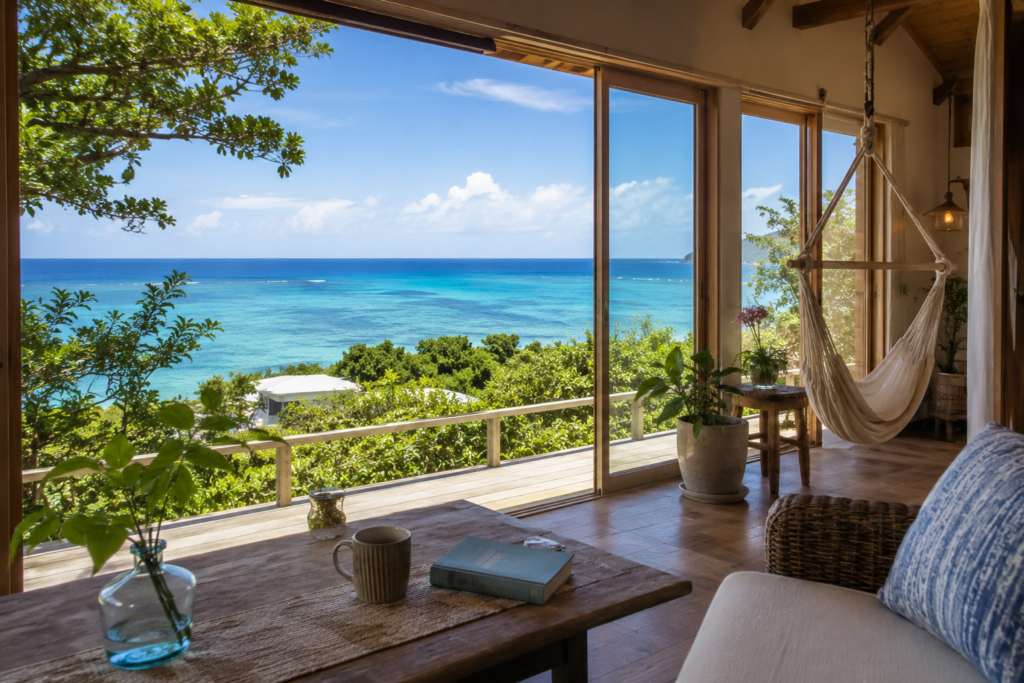
沖縄の魅力は美しい海だけではありません。やんばるの森に抱かれた名護市には、昔ながらの沖縄の暮らしが今も色濃く残っています。時間の流れがゆったりとした「沖縄時間」を体感できるのも、このエリアならではの魅力です。今回は、沖縄の暮らしを体感できるやんばる・名護市の魅力と、貸別荘ヴィラMANANI(マナニ)でのスローライフ滞在についてご紹介します。
「沖縄の暮らし」とは何か
地域の人々との挨拶、季節の野菜や果物を使った食卓、夕暮れ時に感じる風の匂いなど、沖縄の暮らしには小さな豊かさがたくさん詰まっています。観光地を巡るだけでは気づきにくい、そんな暮らしの機微に触れられるのがやんばるエリアの魅力です。
やんばるの自然と共にある暮らし
やんばるの人々の暮らしは、豊かな自然と密接に結びついています。畑仕事や庭先での野菜づくり、森や川との関わり方など、自然のリズムに寄り添う暮らし方は、都会の生活とは異なる時間の流れを教えてくれます。
名護市の市場で出会う沖縄の食文化
名護市には、地元の人々で賑わう市場があり、島野菜や果物、地元で水揚げされた魚介など、沖縄ならではの食材が並びます。市場を歩くだけで、沖縄の食文化や季節の移ろいを肌で感じることができます。
「沖縄時間」というゆったりとした時間感覚
沖縄には「なんくるないさ」という言葉に象徴されるような、おおらかで焦らない時間の感覚があります。この「沖縄時間」に身を委ねることで、日常の忙しさから解放され、心にゆとりが生まれていきます。
MANANIで過ごすスローな一日
名護市のMANANIに滞在すれば、観光の合間にゆったりとくつろぐ時間を持つことができます。庭先で読書をしたり、朝の空気を感じながらコーヒーを飲んだりと、何もしない贅沢を味わえる時間がここにはあります。
一棟貸しだからこそ味わえる暮らすような滞在
ホテルとは異なり、一棟貸しのMANANIでは、キッチンで自分たちのペースで料理をしたり、洗濯をしたりと、旅行者としてではなく「暮らす人」としての時間を過ごすことができます。この滞在スタイルこそが、沖縄の暮らしを体感する近道です。
地元の人々との小さな交流
近所の商店での何気ない会話や、市場でのやり取りなど、地元の人々との小さな交流も沖縄の暮らしを知る大切な要素です。観光客としてではなく、少しだけ地域に溶け込むような滞在を心がけることで、旅の記憶がより深いものになります。
移住者にも人気のやんばるエリア
近年、やんばるエリアには沖縄本島の暮らしに惹かれて移住してくる人々も増えています。豊かな自然と、あたたかい人々のつながりが、多くの人を引き寄せる理由となっています。MANANIでの滞在は、そうした「暮らすように旅する」体験の入り口としてもおすすめです。
自然と共にある暮らしのヒント
やんばるの自然と共存する暮らし方は、忙しい毎日を送る私たちに多くのヒントを与えてくれます。MANANIでの滞在を通じて、自分自身の暮らし方を見つめ直すきっかけを見つけていただければ幸いです。
よくあるご質問
「短い滞在でも沖縄の暮らしを感じられますか」というご質問には、たとえ数日間の滞在でも、市場や商店を訪れるだけで十分にその一端を感じていただけますとお答えしています。「子供と一緒でも楽しめますか」という点についても、ご家族での滞在にも対応しています。
沖縄の一年と季節の移ろい
沖縄の季節は、本土とは少し異なるリズムで移り変わります。一月から二月にかけては寒緋桜が咲き始め、本土より一足早く春の訪れを感じることができます。三月から五月は過ごしやすい気候が続き、六月には梅雨が明けて本格的な夏がやってきます。
秋になっても暖かい日が続き、十一月頃までは半袖で過ごせる日も少なくありません。こうした季節のリズムを知ることは、沖縄の暮らしを理解する第一歩でもあります。滞在する時期によって、見える景色も暮らしの表情も変わっていきます。
島野菜と沖縄の食卓
沖縄の食卓には、ゴーヤーやナーベーラー、ハンダマ、島らっきょうなど、本土ではあまり見かけない島野菜が並びます。強い日差しの中で育つこれらの野菜は、独特の風味と力強さを持っています。
名護市の市場や直売所を訪れると、こうした島野菜が季節ごとに並んでいます。地元の方に調理法を尋ねてみるのも、沖縄の暮らしにふれる楽しい方法の一つです。買った食材をMANANIのキッチンで調理すれば、旅の記憶はより鮮やかなものになります。
沖縄そばという日常食
沖縄そばは、観光客向けの料理というよりも、地元の人々にとっての日常食です。街のあちこちに食堂があり、昼どきには近所の人々で賑わいます。だしの取り方や麺の太さは店ごとに異なり、地域による違いも楽しめます。
名護市にも地元で愛される食堂が点在しています。観光ガイドに載っていないような小さなお店に入ってみると、沖縄の日常の空気を肌で感じることができるでしょう。
名護市の商店街と地域の顔
名護市の商店街を歩くと、昔ながらの個人商店が今も営業している光景に出会います。八百屋や乾物店、洋品店など、地域の暮らしを支えてきたお店が並び、店主との会話も自然と生まれます。
大型店では味わえない、こうした人と人との距離の近さが、沖縄の暮らしの魅力の一つです。短い滞在であっても、商店街を歩くだけで地域の空気を感じ取ることができます。
朝の散歩で見える暮らしの風景
沖縄の暮らしを感じたいなら、朝の散歩がおすすめです。庭先で植物に水をやる人、犬を連れて歩く人、学校へ向かう子どもたち。朝の時間帯には、その土地の日常がそのまま現れます。
やんばるの朝は空気が澄み、鳥のさえずりがよく響きます。観光名所を巡るよりも、こうした何気ない時間の中にこそ、沖縄の暮らしの本質が隠れているのかもしれません。
沖縄の住まいと風土
沖縄の伝統的な住まいには、台風や強い日差しに対応するための工夫が随所に見られます。深い軒や風通しの良い間取りは、自然と共に暮らしてきた知恵の結晶です。
現代の住宅にもその考え方は受け継がれており、風の通り道を意識した設計が多く見られます。やんばるの気候の中で過ごすと、こうした住まいの工夫の意味を身をもって理解することができます。
やんばるの水と暮らし
やんばるの森は、沖縄本島の水源としての役割も担っています。豊かな森が雨水を蓄え、川となって流れ、人々の暮らしを支えてきました。森を守ることが暮らしを守ることに直結する、そんな関係がこの地域にはあります。
川辺を歩けば、水の音や透明度の高さに驚かされます。自然と暮らしが密接につながっていることを実感できるのも、やんばるならではの体験です。
地域の行事と文化にふれる
沖縄には、地域ごとに受け継がれてきた行事や祭りが数多くあります。旧暦を基準にした行事も多く、季節の節目ごとに地域の人々が集まる文化が今も生きています。
訪れた時期に地域の行事が行われていれば、遠くから静かに見学させていただくのも良い経験です。地域の文化に敬意を払いながら接することで、より深い理解が得られます。
子どもたちと自然の距離
やんばるでは、子どもたちが日常的に自然の中で遊ぶ姿を目にします。川で水遊びをしたり、庭先で虫を探したりする光景は、都市部では見かけにくくなったものです。
ご家族で滞在される場合、お子様にとっても貴重な体験の場となります。自然との距離が近い暮らしは、教科書では学べない感覚を育ててくれます。
暮らすように旅するための工夫
「暮らすように旅する」ためには、少しだけ観光の予定を減らすことがコツです。一日に一か所だけ訪れると決めて、残りの時間はゆっくり過ごす。それだけで滞在の質は大きく変わります。
MANANIのように一棟貸しでキッチンのある宿を選ぶことも、暮らすような滞在を実現する重要な要素です。自炊をすることで、地域の食材や商店との接点が自然と生まれます。
買い物と自炊のすすめ
滞在中の食事をすべて外食にするのではなく、一食でも自炊を取り入れてみてください。地元のスーパーや市場を歩き、並んでいる食材を眺めるだけでも、その土地の暮らしが見えてきます。
沖縄のスーパーには、本土ではあまり見かけない食材や調味料が並んでいます。何に使うのかわからないものを試してみるのも、旅の楽しみの一つです。
静けさと向き合う夜の時間
やんばるの夜は、都市部とは比べものにならないほど静かです。人工的な音がほとんどないため、虫の声や風の音がはっきりと聞こえます。最初は静けさに戸惑う方もいるかもしれません。
しかし数日過ごすうちに、その静けさが心地よく感じられるようになります。何もない時間を過ごすことに慣れていくこと自体が、沖縄の暮らしを体感する過程なのかもしれません。
沖縄の暮らしから学べること
沖縄の暮らしには、効率や速さとは異なる価値観が息づいています。人とのつながりを大切にし、自然のリズムに合わせて生きるという姿勢は、忙しい日々を送る私たちに多くの示唆を与えてくれます。
すべてを真似する必要はありません。ただ、そうした暮らし方が存在するということを知るだけでも、自分自身の日常を見つめ直すきっかけになるはずです。
沖縄の言葉にふれる
沖縄には「うちなーぐち」と呼ばれる独自の言葉が今も残っています。「めんそーれ(いらっしゃい)」「にふぇーでーびる(ありがとう)」など、旅先で耳にする機会も多いでしょう。言葉の響きには、その土地の気質が表れているといわれます。
日常会話ではやわらかい沖縄の方言が使われることも多く、その独特のイントネーションに触れるだけでも、旅の記憶は豊かになります。少しだけ覚えて使ってみると、地元の方との距離もぐっと縮まるかもしれません。
泡盛と沖縄の夜
沖縄の食文化を語るうえで欠かせないのが泡盛です。長い歴史を持つ蒸留酒で、水や炭酸で割って料理と共に楽しむのが一般的です。銘柄ごとに味わいが異なり、飲み比べを楽しむ方も少なくありません。
やんばるの静かな夜に、ウッドデッキで星空を眺めながらゆっくりとグラスを傾ける時間は格別です。もちろん、お酒を飲まない方にはシークヮーサージュースなど、沖縄ならではの飲み物も揃っています。
名護市周辺のカフェ文化
やんばるエリアには、自然の中に佇む個人経営のカフェが点在しています。海を望むカフェや、森に囲まれた古民家カフェなど、それぞれに個性があり、店主のこだわりが感じられます。
こうしたカフェでゆっくりと過ごす時間も、沖縄の暮らしを感じる大切なひとときです。急がずに一杯のコーヒーを味わうという行為そのものが、この土地の時間感覚を体現しています。
台風とともにある暮らし
沖縄の暮らしを語るうえで、台風の存在は欠かせません。夏から秋にかけては台風が接近することもあり、地域の人々は日頃から備えを整えています。事前の食料の確保や窓の養生など、生活の知恵が根づいています。
旅行の時期が台風シーズンにあたる場合は、天候情報をこまめに確認し、余裕のある日程を組むことをおすすめします。自然の力を受け入れながら暮らすという姿勢もまた、この土地の文化の一部です。
沖縄の暮らしと音楽
沖縄の暮らしには、三線の音色が深く根づいています。祝いの席や地域の集まりでは、今も自然に音楽が生まれ、人々が輪になって歌い踊る光景が見られます。
音楽が特別なイベントではなく、日常の延長線上にあること。それが沖縄の文化の豊かさを象徴しています。滞在中にどこかで三線の音を耳にしたなら、その瞬間もまた旅の大切な思い出になるはずです。
やんばるの朝市と直売所めぐり
名護市やその周辺には、農家の方が直接野菜や果物を持ち寄る直売所があります。スーパーとは異なり、その日に採れたものが並ぶため、旬をそのまま感じることができます。値段も手頃で、思わず買いすぎてしまう方も多いようです。
直売所では、生産者の名前が書かれた札が付いていることもあります。誰がどこで育てたのかがわかる食材は、食卓に並んだときの味わいも格別です。
沖縄の暮らしを持ち帰る
滞在を終えて日常に戻るとき、沖縄の暮らしの一部を持ち帰ることができます。市場で買った調味料や乾物、地元の陶器などは、帰宅後も旅の記憶を思い出させてくれます。
物だけでなく、ゆったりとした時間の使い方や、自然に目を向ける習慣といった無形の学びこそが、最も価値のある土産なのかもしれません。
沖縄の暮らしを体感したい方、ゆったりとした時間を過ごしたい方は、ぜひやんばる・名護市のMANANIでのスローライフ滞在をお楽しみください。
English
Okinawa’s charm goes far beyond its beautiful ocean. In Nago City, cradled by the Yanbaru forest, the traditional Okinawan way of life still runs deep. Experiencing the slower, more relaxed rhythm known as “Okinawa time” is one of this area’s unique pleasures. In this article, we introduce the charm of experiencing Okinawan living in Yanbaru and Nago City, along with a slow-life stay at the private villa MANANI.
What Does “Okinawan Living” Really Mean
Greetings exchanged among neighbors, meals built around seasonal vegetables and fruits, the scent of the evening breeze — Okinawan life is filled with small, quiet richness. These subtle details, easy to miss when simply sightseeing, are exactly what you can encounter in the Yanbaru area.
A Life Lived Alongside Yanbaru’s Nature
Life in Yanbaru is closely tied to its abundant nature. Farming, tending vegetables in the garden, and the relationship with the forest and rivers all reflect a way of living attuned to nature’s rhythm, teaching a different sense of time than city life.
Encountering Okinawan Food Culture at Nago City’s Market
Nago City has a lively local market filled with island vegetables, fruit, and freshly caught seafood. Simply walking through the market lets you feel Okinawa’s food culture and the changing of the seasons firsthand.
The Relaxed Sense of Time Known as “Okinawa Time”
Okinawa carries an easygoing, unhurried sense of time, often symbolized by the local phrase “nankurunaisa” (things will work out). Letting yourself settle into this “Okinawa time” frees you from the busyness of daily life and creates space in the mind.
A Slow Day at MANANI
Staying at MANANI in Nago City gives you time to relax between sightseeing outings. Read a book in the garden, or sip coffee while feeling the morning air. Here, you can enjoy the luxury of doing absolutely nothing.
A Stay That Feels Like Living, Thanks to the Whole Villa
Unlike a hotel, MANANI lets you cook at your own pace in the kitchen and do laundry as needed, spending time not as a tourist but as someone truly living there. This style of stay is the shortcut to experiencing authentic Okinawan life.
Small Exchanges with Local People
Casual conversations at a neighborhood shop or exchanges at the market are an important part of understanding Okinawan life. Staying with an openness to blend into the community makes the memory of your trip that much deeper.
An Area Popular with People Who Relocate to Okinawa
In recent years, more people have moved to the Yanbaru area, drawn by its way of life. Rich nature and warm community ties are the reasons many are drawn here. A stay at MANANI is a great entry point into this style of “living-like travel.”
Lessons from a Life Lived with Nature
A lifestyle that coexists with Yanbaru’s nature offers many lessons for those of us living busy daily lives. We hope your stay at MANANI becomes an opportunity to reflect on your own way of living.
Frequently Asked Questions
“Can I experience Okinawan life even with a short stay?” Even a few days are enough to get a real sense of it simply by visiting the market and local shops. “Can I enjoy it with children?” Yes, MANANI is well suited for family stays.
The Rhythm of Okinawa’s Year
Okinawa’s seasons move to a slightly different rhythm than mainland Japan’s. Cold-weather cherry blossoms begin blooming in January and February, bringing spring earlier than elsewhere. March through May stays comfortable, and once the rainy season lifts in June, full summer arrives.
Warm days continue into autumn, and short sleeves are often fine into November. Understanding this rhythm is a first step toward understanding Okinawan life, since the scenery and daily texture change with the season you visit.
Island Vegetables and the Okinawan Table
Okinawan tables feature island vegetables rarely seen on the mainland, such as goya, nabera, handama, and island rakkyo. Grown under strong sunlight, they carry distinctive flavor and vigor.
Visit a market or farm stand in Nago City and you’ll find these vegetables changing with the season. Asking locals how to cook them is a delightful way to touch Okinawan life, and preparing them in MANANI’s kitchen makes the memory more vivid.
Okinawan Soba as Everyday Food
Okinawan soba is less a tourist dish than everyday food for locals. Small eateries dot the streets and fill with neighbors at lunchtime. Broth styles and noodle thickness differ by shop, and regional variations are part of the fun.
Nago City has its share of beloved local eateries. Stepping into a small shop that never appears in guidebooks lets you feel the ordinary air of Okinawan life.
Nago’s Shopping Streets and Local Faces
Walking Nago City’s shopping streets, you’ll still find long-running family shops: greengrocers, dried goods stores, clothing shops that have supported local life for decades, where conversation with the owner comes naturally.
This closeness between people, impossible to find in large chain stores, is one of the charms of Okinawan living. Even on a short stay, a walk through the shopping street conveys the character of the community.
Morning Walks and Everyday Scenes
If you want to feel Okinawan life, take a morning walk. People watering plants in their gardens, walking dogs, children heading to school — the morning hours reveal the everyday life of a place as it is.
Mornings in Yanbaru bring clear air and resonant birdsong. The essence of Okinawan living may be hidden in these unremarkable moments more than in any famous sightseeing spot.
Okinawan Homes and Climate
Traditional Okinawan houses show countless adaptations to typhoons and intense sun. Deep eaves and layouts designed for airflow are the crystallized wisdom of living alongside nature.
That thinking carries into modern homes as well, with designs conscious of how breezes pass through. Spending time in Yanbaru’s climate lets you understand the purpose of these features firsthand.
Water and Life in Yanbaru
The Yanbaru forest also serves as a water source for Okinawa’s main island. The abundant forest stores rainfall, which flows into rivers that sustain daily life. Here, protecting the forest is directly tied to protecting the way people live.
Walking along the rivers, you’ll be struck by the sound and clarity of the water — a tangible reminder of how closely nature and living are connected in this region.
Encountering Local Events and Culture
Okinawa is home to many festivals and observances passed down within each community. Many follow the lunar calendar, and the culture of gathering at seasonal turning points remains very much alive.
If a local event happens during your visit, quietly observing from a respectful distance can be a meaningful experience. Approaching local culture with respect leads to deeper understanding.
Children and Their Closeness to Nature
In Yanbaru you’ll see children playing in nature as a matter of course, splashing in rivers or hunting for insects in the garden — scenes increasingly rare in urban areas.
For families staying here, this becomes a valuable experience for children too. A life lived close to nature nurtures a sensibility no textbook can teach.
How to Travel as If You Live Here
The trick to traveling as if you live somewhere is simply to plan a little less. Decide to visit one place a day and spend the rest of the time slowly. That alone transforms the quality of a stay.
Choosing a whole-villa rental with a kitchen, like MANANI, is another important element. Cooking for yourself naturally creates points of contact with local ingredients and shops.
Shopping and Cooking for Yourself
Rather than eating out for every meal, try cooking at least once. Walking through a local supermarket or market and simply looking at what’s on the shelves reveals a great deal about local life.
Okinawan supermarkets stock ingredients and seasonings rarely seen elsewhere in Japan. Trying something you don’t recognize is one of the pleasures of travel.
Facing the Quiet of Evening
Nights in Yanbaru are quiet beyond comparison with the city. With almost no artificial noise, insects and wind come through clearly. Some visitors find the silence disorienting at first.
After a few days, though, that quiet begins to feel comforting. Growing accustomed to unoccupied time may itself be the process of experiencing Okinawan life.
What Okinawan Living Can Teach Us
Okinawan life holds values distinct from efficiency and speed. Prioritizing human connection and living in step with nature’s rhythm offers plenty to reflect on for those of us with busy schedules.
There’s no need to imitate all of it. Simply knowing that such a way of living exists can be enough to prompt a fresh look at your own everyday life.
Encountering the Okinawan Language
Okinawa retains its own language, known as Uchinaaguchi. Travelers often hear phrases such as “mensore” (welcome) and “nifee deebiru” (thank you). The sound of a language is said to reflect the temperament of its place.
Everyday conversation often carries the soft Okinawan dialect, and simply hearing its distinctive intonation enriches the memory of a trip. Learning a phrase or two may bring you noticeably closer to the people you meet.
Awamori and Okinawan Evenings
No discussion of Okinawan food culture is complete without awamori, a distilled spirit with a long history, usually enjoyed diluted with water or soda alongside a meal. Flavors vary by brand, and many visitors enjoy comparing them.
On a quiet Yanbaru evening, sipping slowly on the wooden deck beneath the stars is something special. For those who don’t drink alcohol, local options such as shikuwasa juice are also widely available.
Cafe Culture Around Nago City
The Yanbaru area is dotted with independently run cafes tucked into the landscape, from ocean-view spots to old-house cafes surrounded by forest, each reflecting the character and care of its owner.
Spending unhurried time in these cafes is itself part of feeling Okinawan life. The simple act of savoring a cup of coffee without rushing embodies this region’s sense of time.
Living Alongside Typhoons
Typhoons are inseparable from life in Okinawa. From summer into autumn, storms may approach, and residents keep prepared as a matter of routine, stocking food in advance and securing windows — practical wisdom built into daily life.
If your trip falls during typhoon season, we recommend checking weather updates frequently and allowing flexibility in your itinerary. Accepting the force of nature is itself part of the local culture.
Music in Okinawan Life
The sound of the sanshin is deeply rooted in Okinawan life. At celebrations and community gatherings, music still arises naturally, with people forming circles to sing and dance.
Music here isn’t reserved for special events; it’s an extension of everyday life, which says much about the richness of Okinawan culture. If you happen to hear a sanshin during your stay, that moment will likely stay with you.
Morning Markets and Farm Stands
In and around Nago City, farmers bring vegetables and fruit directly to local stands. Unlike supermarkets, what’s on display was harvested that day, so you feel the season directly. Prices are reasonable, and many visitors end up buying more than planned.
Produce at these stands often carries a tag with the grower’s name. Knowing who grew your food and where makes it taste all the better at the table.
Taking Okinawan Living Home with You
When your stay ends, you can carry a piece of Okinawan life home. Seasonings and dried goods from the market, or local pottery, will keep reminding you of the trip long after you return.
Beyond objects, the intangible lessons — an unhurried use of time, a habit of noticing nature — may be the most valuable souvenirs of all.
For those who want to experience authentic Okinawan living and enjoy a relaxed pace of time, we hope you’ll enjoy a slow-life stay at MANANI in Yanbaru, Nago City.